Ani’s golden age of wealth, peace and prosperity came to an end with the death of the Armenia ruler King Gagik I, after which the city gave way to a string of invaders starting with the Byzantines, followed by a ruthless massacre by the Turks, the Kurds, the Georgians, and then the Mongols who left the city devastated in 1236. Although Ani continued to exist for another six centuries it was little more than a small town. By the time the Europeans discovered Ani, it lay abandoned for nearly a century with great heaps of stones for former buildings. Ani’s most visible monuments today are the dozens of half standing churches.

The Church of the Redeemer, completed shortly after the year 1035. It had a unique design: 19-sided externally, 8-apsed internally, with a huge central dome set upon a tall drum. The church was largely intact until 1955, when the entire eastern half collapsed during a storm. Photo credit: Romel Jacinto/Flickr

Photo credit: Ggia/Wikimedia

The church of St Gregory of Tigran Honents. Photo credit: Sara Yeomans/Flickr

The Cathedral of Ani, built in 989. Photo credit: Sara Yeomans/Flickr

Photo credit: Peter Liu/Flickr
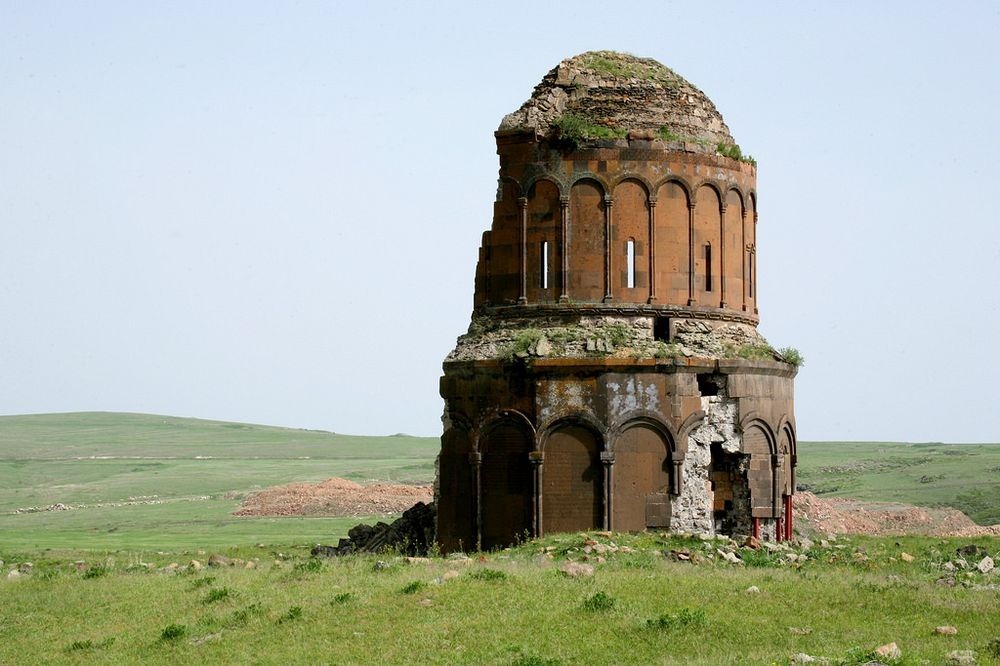
The Church of the Redeemer. Photo credit: Peter Liu/Flickr

The walls of Ani. Photo credit: Peter Liu/Flickr

Photo credit: Martin Lopatka/Flickr
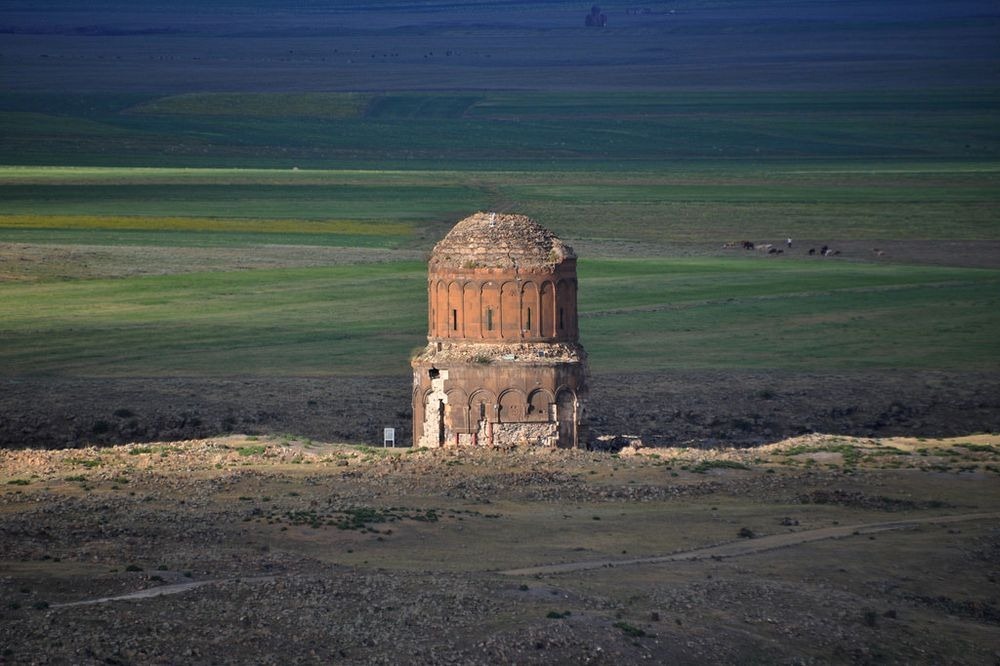
Photo credit: Sarah Murray/Flickr

Photo credit: haigoes/Panoramio

Photo credit: Sarah Murray/Flickr

Photo credit: orientalizing/Flickr
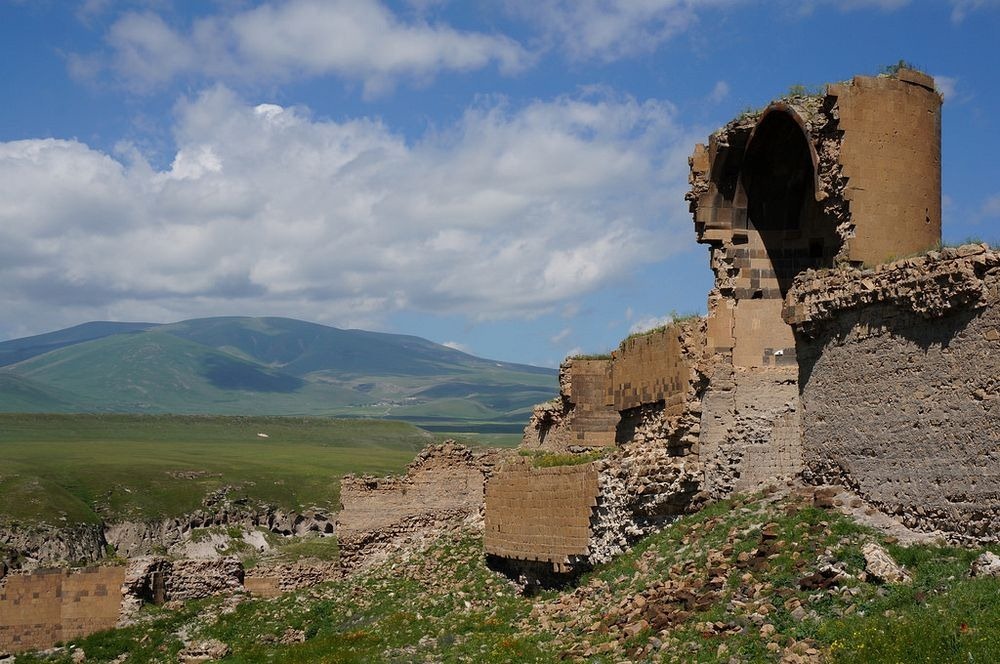
The walls of Ani. Photo credit: Mr Hicks46/Flickr
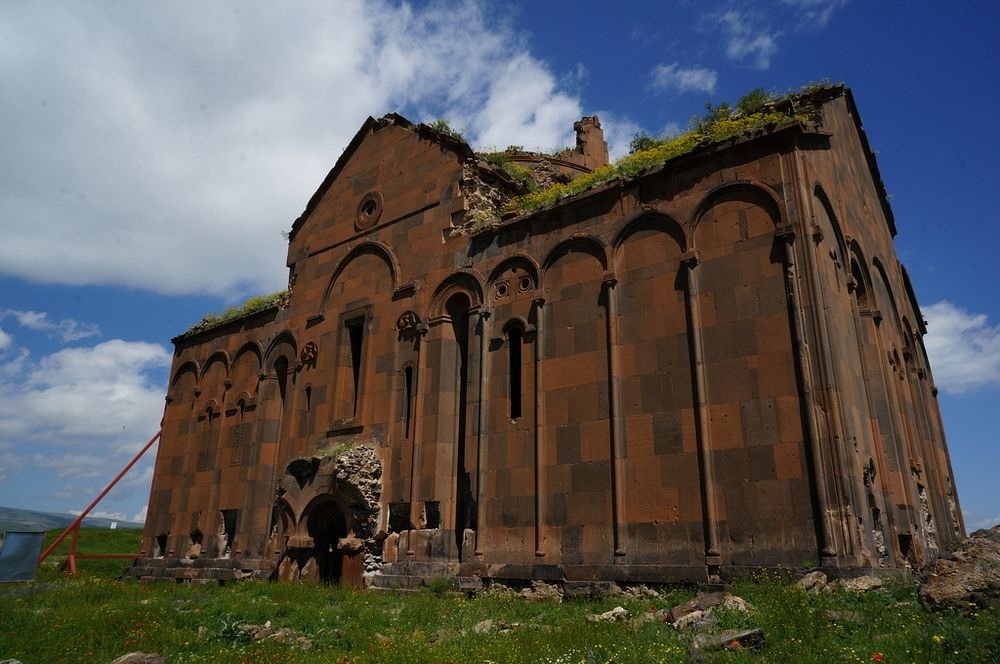
The Cathedral of Ani. Photo credit: Mr Hicks46/Flickr

The ceiling of a church. Photo credit: Mr Hicks46/Flickr

The Monastery of the Hripsimian Virgins, by the Akhurian River. Photo credit: eggs-in-art-en.blogspot.com/The Atlantic

The walls of Ani. Photo credit: Dusty Kurtz/Flickr
Sources: Wikipedia / WikiTravel / BBC