The decision to put fictional bridges on the bank notes was taken when it was realized that it was impossible to feature architectural landmarks from each of the 12 European Union member nations when there were only seven bank notes. Worried that excluding any member would leave them offended, the European Monetary Institute decided to feature imaginary bridges instead, that represents different styles and age of Europe.

Photo credit: Klaas Boonstra
The Austrian designer Robert Kalina was commissioned to the task of creating seven different bridges representing different periods: baroque, classical, gothic, Romanesque, rococo, the modern 20th century, as well as an iron and glass architecture.
Robert Kalina did a fantastic job and everybody was happy, until 2011, when a Dutch town decided to bring the bridges to life, and in a single sweep claimed all of the Euro's imaginary bridges for the Netherlands.
It was designer Robin Stam who suggested the idea to the Rotterdam city council, who liked it immediately and began enthusiastically supporting the project. A town called Spijkenisse in the suburb of Rotterdam became the chosen site.
With the help of a small team of engineers and designers, Robin Stam recreated the bridges true to the images. He even painted them the same bright hues they were printed with on the notes. Although Stam admits that some have found the bridges ugly, most people think the idea is funny including European Central Bank officials and Robert Kalina, the original Austrian designer behind the euro banknotes.
"It's a very humorous idea," Robert Kalina told Spiegel Online. "But I would have liked to have seen them built in the actual old style of the bridges they were modelled on instead of the kitschy façade."

The seven bank notes introduced in 2002.
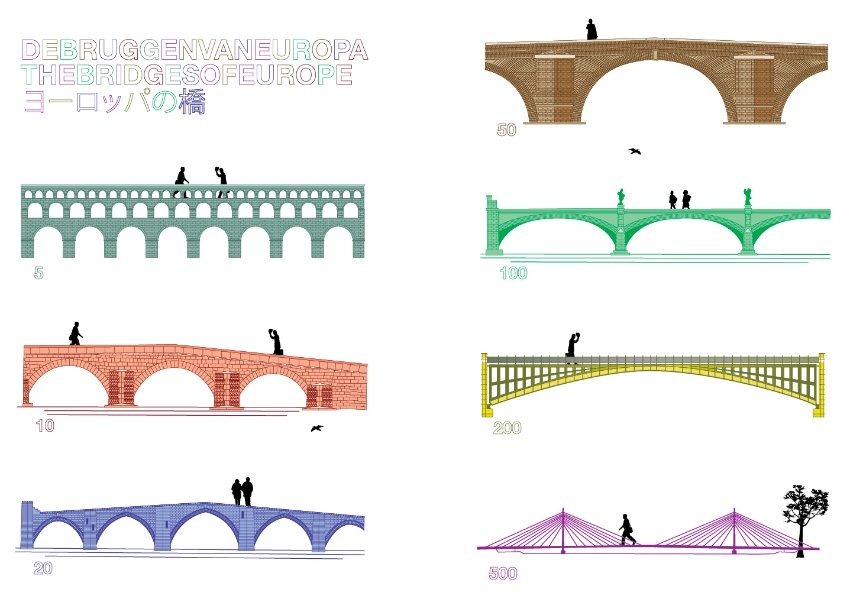
Robin Stam’s plans for the bridges.

Matching the colors in the concrete with the bank notes.
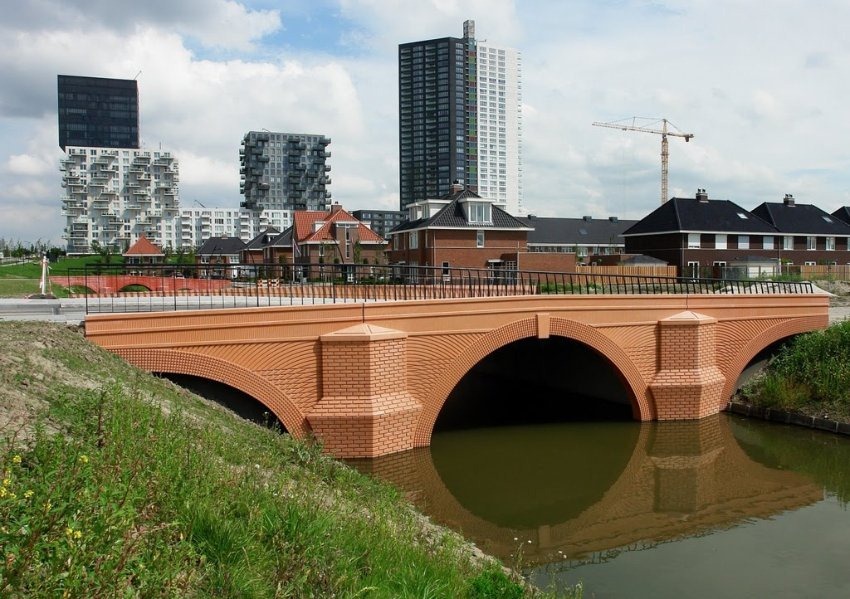
Photo credit: Klaas Boonstra

Photo credit: Klaas Boonstra

Photo credit: Klaas Boonstra

Photo credit: Klaas Boonstra

Photo credit: Klaas Boonstra

Photo credit: Klaas Boonstra

Photo credit: Klaas Boonstra

Photo credit: Klaas Boonstra
Subscribe to our Newsletter and get articles like this delieverd straight to your inbox