Last-Minute DIY Gift Wrapping Ideas
Art DIYLast-Minute DIY Gift Wrapping Ideas
Make your wrapping bright and colorful with a lights motif
Advertisement
One of the strangest places in Utah, United States, is Goblin Valley located in Emery County between the towns of Green River and Hanksville. This valley, which is only about a mile across and two miles long, is filled with thousands of hoodoos —eroded sandstone rocks, carved by the wind and the water into shapes suggesting mythical goblins and other phantasmagoric creatures. The most striking of these formations are three isolated hoodoos, immense in size, standing on top of a narrow ridge, surrounded by the flat, grassy land that extends for miles around.
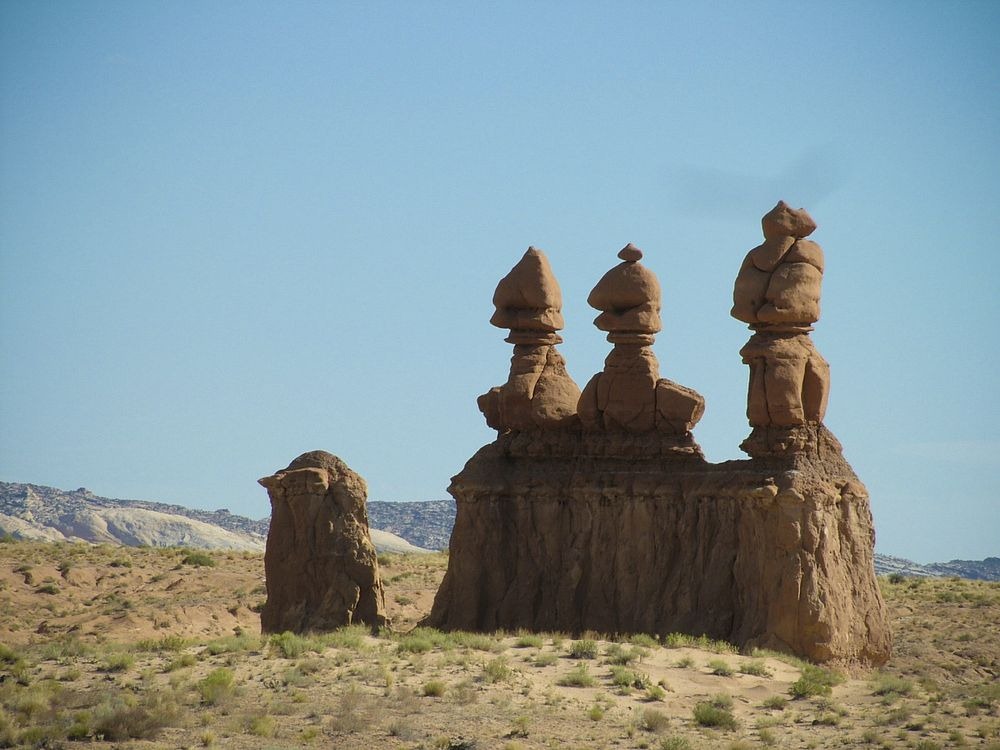
Photo credit: morgan/Flickr
The hoodoos were formed by the erosion of the so-called Entrada sandstone, that was deposited during the Jurassic period between 180 and 140 million years ago, when the area was situated next to an ancient sea. These odd shapes were created because the Entrada sandstone is made up of different kinds of sedimentary rocks having different levels of hardness, causing the rocks to erode at different rates. The softer rock material eroded more quickly, leaving the harder rock behind in the shape of ‘goblins’.
The secluded Goblin Valley was first discovered by cowboys searching for cattle. Then, in the late 1920s, Arthur Chaffin, the later owner of the Hite Ferry, along with his companions were searching for an alternate route between Green River and Caineville, when they came to a vantage point about 1 mile west of Goblin Valley. It is said that Chaffin and his companions were awed by what they saw —five buttes and a valley of strange, goblin-shaped rock formations surrounded by a wall of eroded cliffs. Chaffin named the area Mushroom Valley. He returned to it in 1949 and spent several days exploring the mysterious valley and photographing its scores of intricately eroded rocks.
In 1954, the property was acquired by the state of Utah and the Goblin Valley State Reserve was established. It was officially designated a state park in 1964.
Photo credit: Pam Falcioni/Flickr
Photo credit: Rob Lee/Flickr
Photo credit: morgan/Flickr
Photo credit: Steve Corey/Flickr
Photo credit: Art Bromage/Flickr
Photo credit: jimmy thomas/Flickr
Sources: Wikipedia / MNN.com / Summit Post
Subscribe to our Newsletter and get articles like this delieverd straight to your inbox
Advertisement
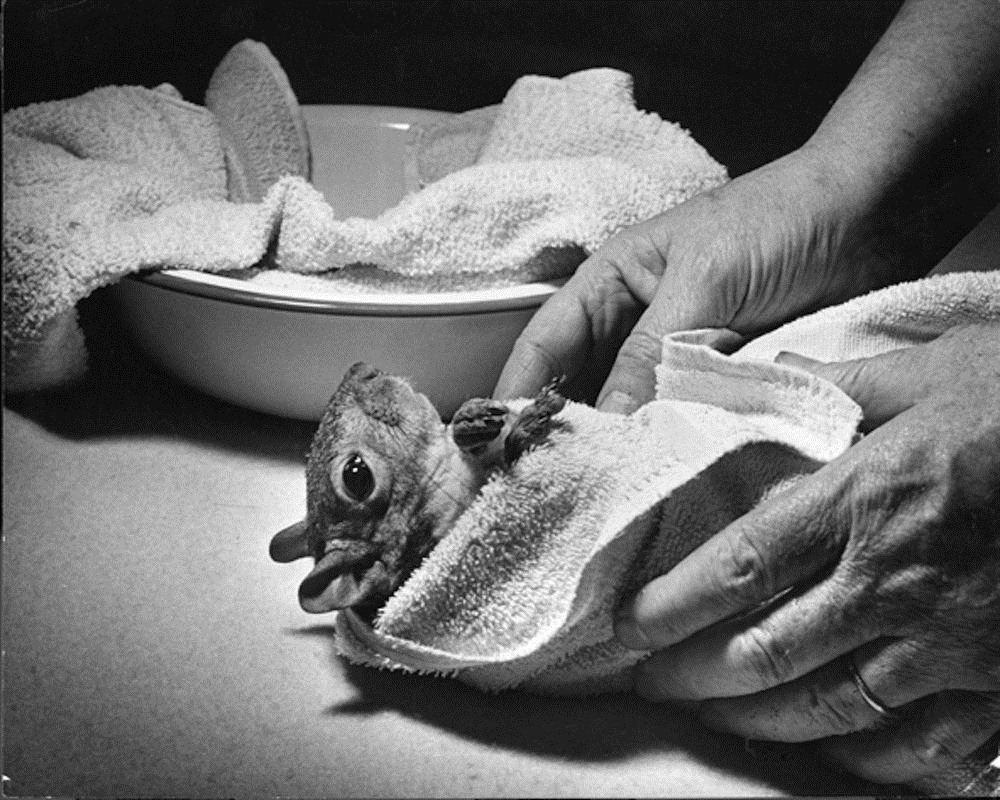
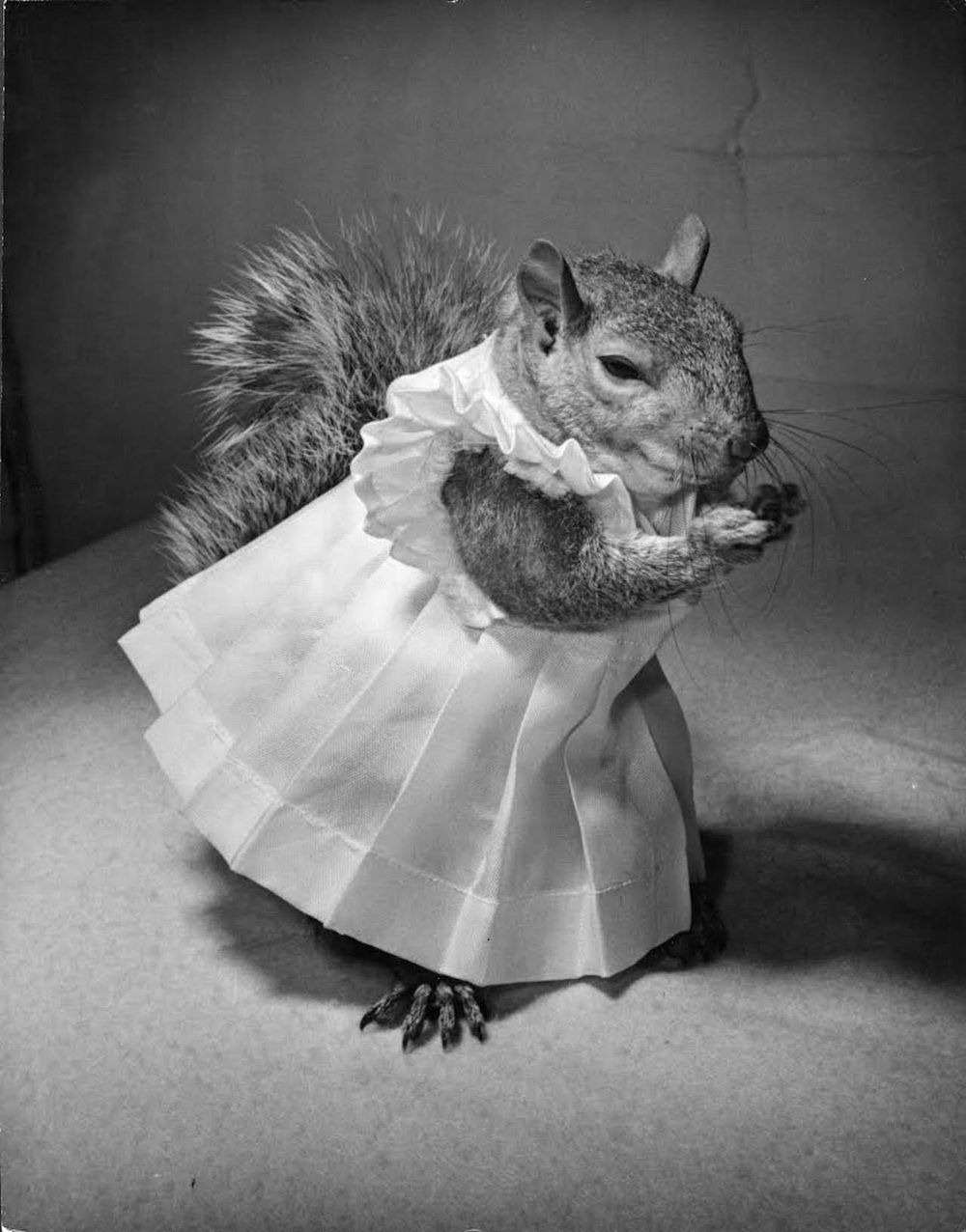
It is said that Tommy Tucker fell from a tree one fine afternoon in 1942 in the backyard of the Bullis’ house, in Washington, D.C., while he was still a blind and hairless baby. Zaidee Bullis, a childless mother and wife to a dental surgeon, adopted the tiny squirrel and made him a family pet. She fed him, bathed him, and put him to sleep on a tiny bed. But what Mrs. Bullis liked the most was dressing him up. Tommy Tucker had about thirty different costumes, and although Tommy was a boy, all his outfits were female for the simple reason that his tail would not fit in pants.
“Tommy has a coat and hat for going to market, a silk pleated dress for company, a Red Cross uniform for visiting the hospital,” wrote LIFE magazine when he appeared on print in 1944, complete with a gallery of photographs —the same ones on this page— taken by Nina Leen.
Tommy began accompanying Mrs. Bullis wherever she and her family went. He visited schools and was a frequent visitor to Children’s Hospital, where he charmed his young audience. He even appeared on the radio alongside President Franklin Roosevelt to promote the sale of war bonds. At the height of his fame, the Tommy Tucker Club had 30,000 members.
Tommy never complained his unnatural life, although sometimes he bit Mrs. Bullis.
After the war, Tommy’s celebrity life fizzled out, although he continued to make trips to different schools to entertain the kids. He also had a companion then, a wife named Buzzy.
When Tommy died on June 25, 1949, the Bullis family sent him to a taxidermy company in Denver to be stuffed so that he could be placed in a museum. Tommy’s mortal remains never made it to the museum, but somehow ended up in the possession of a Maryland resident. When she died in 2005, she offered Tommy, along with all his belongings that included his dresses, souvenir photographs, and letters from schoolchildren, to the Smithsonian Institute. But for some reason, the institute turned him down. The current whereabouts of Tommy is a mystery.
Related Reading: LOLCats From Yesteryears: Photographs by Harry Whittier Frees
Sources: Washington Post / Jack Benny in the 1940s
Subscribe to our Newsletter and get articles like this delieverd straight to your inbox
Advertisement
Six miles off the coast of Deal in East Kent, England, lies one of the most treacherous stretches of sand in Britain. Lying in the middle of the English channel in the narrow Straits of Dover, close to one of the busiest shipping channel in the world, the sands present a great challenge to navigators. Since the first documented shipwreck on Goodwin Sands in 1298, more than 2,000 ships are believed to have wrecked here. Dozens of wrecks still lie underneath the waves.
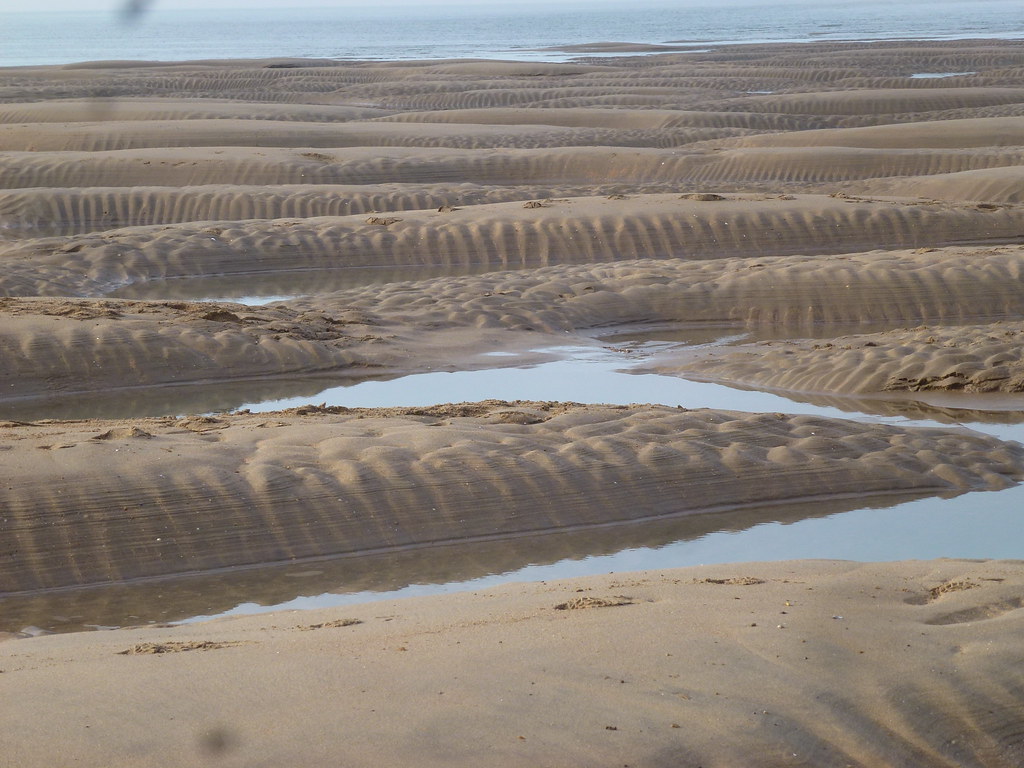
The Goodwin Sands is about 10 miles long and 3 miles wide at its widest, but because of the tides and currents, the shoals are constantly sifting. Usually, the sand remains completely submerged between 8 to 15 meters beneath the surface, but as the tide falls, the sandbank break the surface and expose about a tenth of their total area. During these times, the sand is firm enough to walk upon.
Photo credit: www.dover-marina.com
Typically, a ship would run into the sand during rough weather and begin to break. Any survivor who manages to escape onto the sand might have been able to light fires and attempt to attract the attention of passing ships, or the Boatsmen of Deal and Kingsdown. If help didn’t arrive within hours, the tide would return and the sand would turn into quicksand, and ships and survivors would be engulfed.
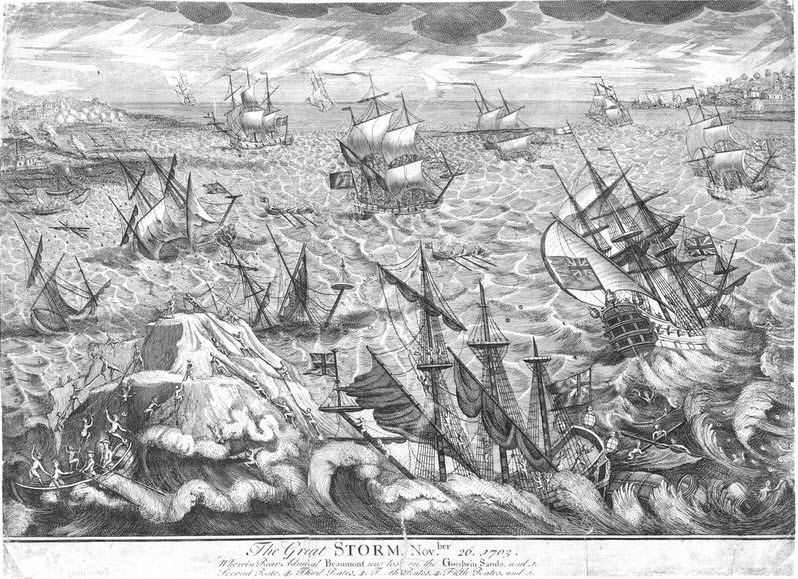
The biggest loss of life occurred during the Great Storm of 1703 when at least 13 men-of-war and 40 merchant vessels were wrecked in the Downs, resulting in the deaths of 2,168 lives. One of the ships lost during that night —the HMS Stirling Castle— was discovered by local divers in 1979. Other notable wrecks include an East India Company ship the Admiral Gardner that wrecked in January 1809. It carried a cargo of iron, guns, anchors, and 48 tons of company coins. This wreck was found in 1984, and about a million coins were recovered. The wreck of Admiral Gardner is now designated a protected area with a 300-meter exclusion zone around its remains.
Modern navigation technology, particularly that assisted by GPS, and detailed mapping of the channel now allow ships to avoid the Goodwin Sands. There have been no major accidents here since a lightship capsized in 1954 killing six crew members.
There is currently one lightship on the end of the sands to warn ships. The sands were once covered by two lighthouses on the Kent mainland, one each covering the north and south ends of the sands. The South Foreland lighthouse is now owned by the National Trust, and the North Foreland lighthouse is still in operation.
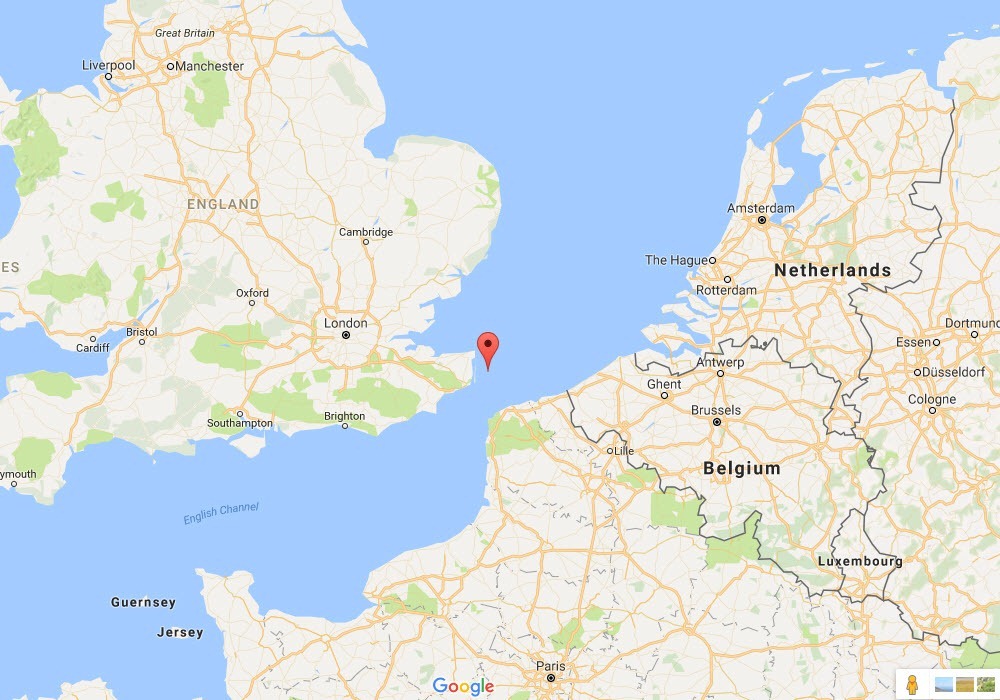
The location of Goodwin Sands on the Straits of Dover.
Photo credit: www.dover-marina.com
Wreck of the SS Mahratta on the Goodwin Sands from an old postcard.
The Great Storm November 26, 1703 Wherein Rear Admiral Beaumont was lost on the Goodwin Sands.
Sources: UK Shore Blog / www.dover-marina.com / Wikipedia
Subscribe to our Newsletter and get articles like this delieverd straight to your inbox
Advertisement
In the spring of 1917, when the United States entered the First World War, the need for more sailors and marines became paramount. In order to spark interest among young men and convince them to volunteer for the war, the US Navy decided to erect a huge wooden replica of a battleship in Union Square, in the heart of New York City.
Called USS Recruit —since its purpose was recruitment— the wooden battleship mockup measured over 200 feet long and had a width of 40 feet. It carried two cage masts, a conning tower and a dummy smokestack. It was also equipped with six wooden replicas of 14-inch guns in three twin turrets, ten wooden five-inch anti-torpedo boat guns and two replica one-pound saluting guns, matching the configuration of battleships of the time.
Photo credit: Library of Congress
In order to demonstrate the life of a navy to potential civilian recruits, USS Recruit had a full crew of sailors, officers and doctors who lived in the ship, and slept in their respective quarters and cabins. The crew would wake up at 6 a.m., scrub the decks, do their laundry, and take shifts standing guard until 11pm. During this time they were available for answering questions from visitors. By night, all the ship's lights were turned on, including a series of searchlights.
The ship functioned both as a tool for recruitment and training. There was a wireless station, a heating and ventilation system and examination rooms to assess the health of potential candidates.
USS Recruit was largely successful, helping the Navy enlist 25,000 new men.
After the war ended in 1918, the ship remained in Union Square for two more years hosting a variety of social events and receptions, dances for New York's socialites, as well as patriotic events such as speeches and unfurling of a recreated Betsy Ross American flag.
In 1920, the ship was dismantled with the intention of relocating it to Coney Island's Luna Park. But this did not happen and the fate of the Recruit is unknown.
Photo credit: Library of Congress
Photo credit: Library of Congress
Photo credit: Library of Congress
Photo credit: Library of Congress
Photo credit: Library of Congress
Photo credit: Library of Congress
Photo credit: Library of Congress
Photo credit: Library of Congress
Photo credit: Library of Congress
Photo credit: Library of Congress
Photo credit: Library of Congress
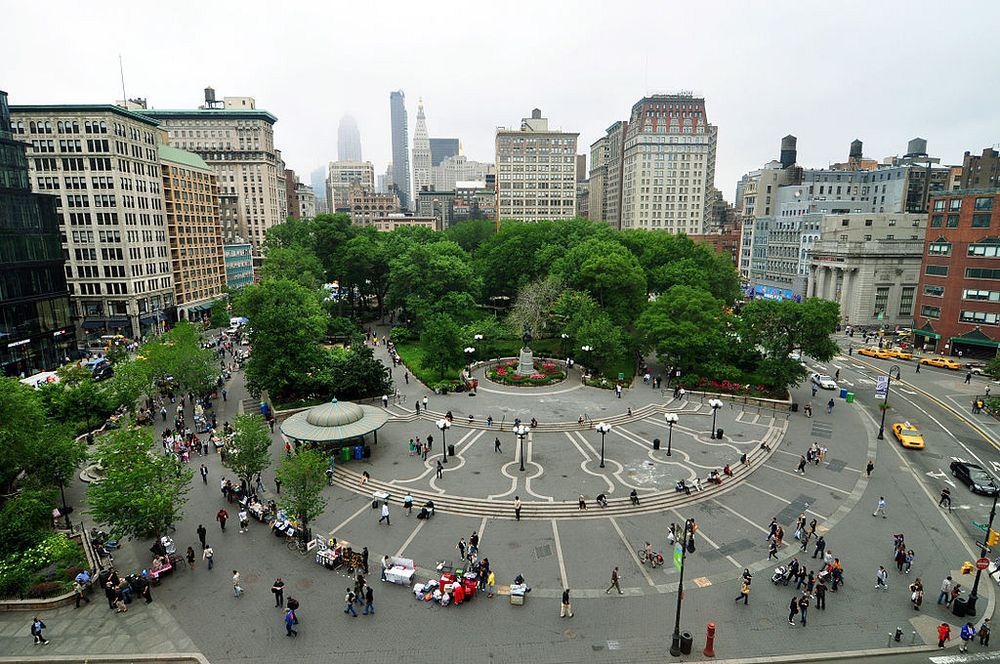
The Union Square in 2010. Photo credit: chensiyuan/Wikimedia
Sources: Wikipedia / Mashable / Historical Firearms
Subscribe to our Newsletter and get articles like this delieverd straight to your inbox
Advertisement
Most sponge that we use today are synthetic, but in the old days sponge was collected from the sea bed. Some of the finest-quality sea sponge, a jelly-like marine creature with a body full of pores, can be found in the warm waters of southeastern Mediterranean. The ancient Greeks knew about these animals and their usefulness in scrubbing and cleaning purposes, and for maintaining personal hygiene. Sponge was also used for padding helmets and for filtering water.
The entire Greek sponge industry was centered on a string of islands in the Aegean Sea, called the Dodecanese Islands. For generations, young men and their fathers and their forefathers earned their living by diving for sponges. Traditionally, the sponge was gathered from the ocean floor by ‘skin diving’, or free diving without clothes and without using any breathing apparatus. Sponge divers would dive to the bottom of the sea on just a single breath of air, weighing their body down by a piece of flat stone that weighed up to 15 kg. The heavy stone would drag the naked bodies quickly to the bottom. The presence of sponge on the dive site would have been already verified by the crew above using a cylindrical viewing pipe with a glass bottom. Once the diver reached the floor, he would cut loose as many sponges as he could and stuff them into a mesh bag. A skilled diver could dive up to depths of 30 meters and stay under water for 3 to 5 minutes.
Display of natural sponges for sale on Kalymnos in Greece. Photo credit: Tom Oates
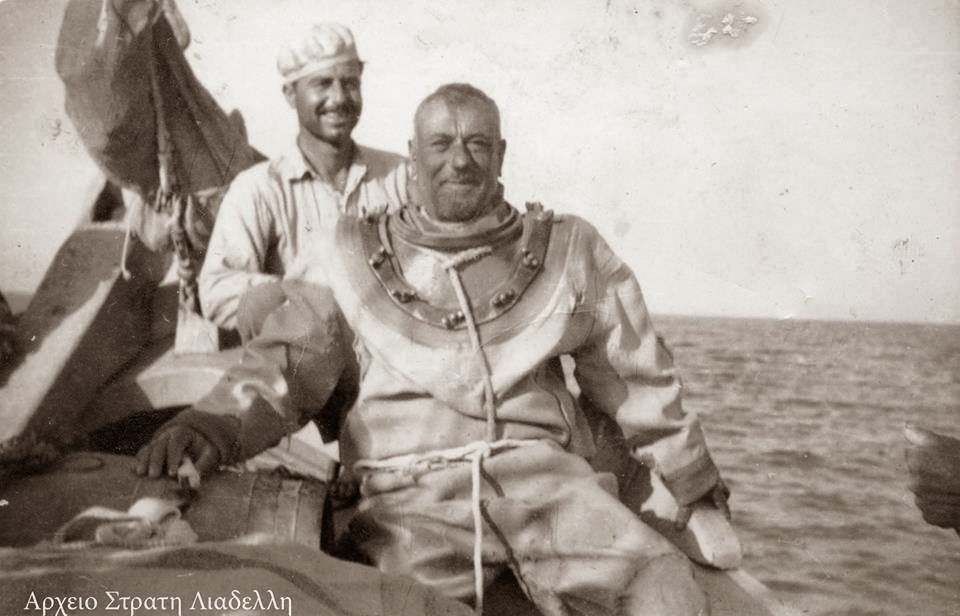
In the middle of the 19th century, sponge diving was revolutionized by the invention of the diving suit, or “skafandro”, as the Greeks called it. The divers wore a suit made of rubber and breathed through an air hose that supplied him oxygen from the boat above. This allowed the sponge divers to venture deeper into the ocean and stay down for longer periods of time, and thus collect more sponge. Productivity increased a hundredfold, bringing enormous wealth to the islanders.
But the diving suit also brought a dramatic change in the physiology of diving. Rather than taking one deep breath, the diver now breathed compressed air, that dissolved more easily in blood due to increased pressure in the depths. When the diver rose too quickly from the sea bed, which he often did, the dissolved gases formed bubbles inside the body producing a painful condition known as decompression sickness or ‘the bends’. The lucky ones got away with joint pains and headache, but some became paralyzed for life. Many collapsed and died.
With no knowledge of decompression sickness or dive tables, the casualties mounted up quickly. Between 1866 and 1895, on the island of Kalymnos alone, 800 young men died of the bends and 200 more were paralyzed. The deaths and the paralysis shattered the families of Kalymnos. Every household on the island had at least one sufferer.
Eventually, at the request of the grief-stricken women of Kalymnos, the Ottoman empire forbade the use of the diving suit in 1882. The divers had to go skin diving again, and profits dropped causing concern among the men. After a few years, the diving suit was back, and so were the decompression accidents.
The knowledge of decompression and decompression sickness developed in the late 19th century. The first workable decompression table came out in 1910. It took several more years for that knowledge to reach the remote Greek islands. The decompression tables could not prevent all diving accidents. The first tables did not cover repeated dives and the sponge divers made several repeated dives each day. As soon as they found out how important the bottom time was to prevent accidents the bottom time was kept by somebody aboard the ship.
At the turn of the 20th century, the sponge industry suffered a setback when a disease hit the eastern Mediterranean destroying a great number of sponges. With sponge beds depleted many divers from the islands of Kalymnos, Halki and Symi migrated to other parts of the world where sponge is known to occur. Some settled in Tarpon Springs, in Florida, USA. The expertise they brought with them turned the sponge industry into one of the leading maritime industries in Florida and the most important business in Tarpon Springs, generating millions of dollars a year. In the mid-20th century the Florida sponge industry suffered the same fate as the Mediterranean industry did some fifty years ago—a red tide algae bloom wiped out the sponge fields in the Gulf of Mexico. Since then, periodic outbreaks, both in the Mediterranean and the Gulf of Mexico, have never allowed the sponge industry to recover. With the development of synthetic sponge, the sponge industry gradually spluttered to a halt.
Today, one can still see some sponge diving action, with modern diving gear, on the Greek island of Kalymnos. In the capital of Kalymnos, Pothia, there are a number of workshops where natural sponges are cut and sold. There is also a museum where you can see some old diving suits and other displays on sponge diving.
Sponge diver in Tarpon Springs, Florida, circa 1907.
Photo credit: Stratis Liadellis
Photo credit: Stratis Liadellis
Photo credit: Stratis Liadellis
Sponges for sale in Rhodes, Greece. Photo credit: Joe Ross/Flickr
Loops of sponges at Tarpon Springs, Florida. Photo credit: psyberartist/Flickr
Sponges on the dock. Tarpon Springs, Florida. Photo credit: Walter/Flickr
A memorial to sponge divers in Tarpon Springs, Florida. Photo credit: Daniel Oines/Flickr
Photo credit: www.seaspongecompany.com
Sources: Wikipedia / www.divingheritage.com / Michael N Kalafatas / Divernet
Subscribe to our Newsletter and get articles like this delieverd straight to your inbox